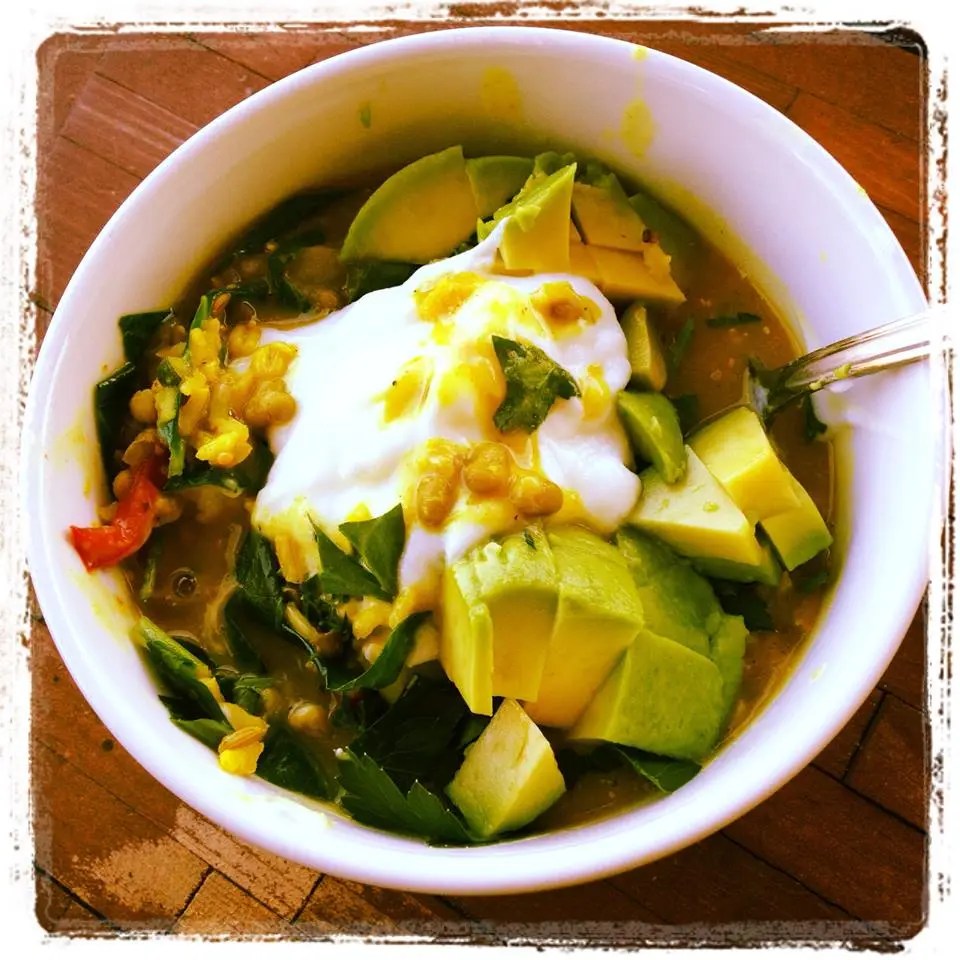
There are as many ways to make Kitchari (Kitcharee) as there are conditions in the body that can be transformed through food. Without going into the details of the doshas and what foods support which dosha or imbalance (I’ll share a website I find useful for your own research), Im going to give you a simple recipe that you are totally free to change up as you like. I like to call recipe guidelines rather than road maps. Play with it, see what works for you!
- 1c. Mung Beans (sprouted)
- ½c. Quinoa (soaked for at least an hr and drained)
- any combination of fennel, cumin, turmeric, coriander, cardamom, cinnamon, cayenne, salt, pepper, garam masala, ginger (raw) and/or curry (Mix and match)
- A blend of seasonal veggies (chopped any way you want)
- 1/4c. Ghee (or more depending on desire)
- 1 piece of Kombu (broken up)
- small onion and lots of garlic (or not)
- Mushrooms (shitake, baby bellas or foraged are best)
- Love and presence
I like to prep all my ingredients before cooking. It is calming to me having bowls of everything laid out and prepared, allowing for different cook times and styles (ex. beets, potatoes, yams in one bowl because they take more time. Greens, brussel sprouts, and cabbage in another as they take less time). Drain the *sprouted mung beans and rinse the *soaked quinoa.
Turn the heat on high, and add ghee. As the ghee is melting, add the diced onion and ginger. Sautee in the pan until the onions are just starting to caramelize. Add mushrooms (if using), continuing to sautee. If you need more ghee add it now.
Once the mushrooms have cooked down, al dente, add your spices, mixing well to coat everything. Add water and stir to deglase the pot. Add more water + the longer cooking veggies and kombu at this time. Give it another stir. Increase heat, cover and bring to a boil. After the first boil, add the other veggies + quinoa. Add more water if you like, you can make it soupy or stew like, its up to you! Bring to a simmer and let it cook to your desired level.
Now is the time to add your sprouted the mug beans! There isn’t a need to cook for a long time, the less time the more nurtirients. I like to cook my Kitchari just to the point that the root veggies are al dente. But you do you! Just remember that the more you cook, the more you alter the nutrients in the food.
I am Pitta/Vata, so I like to add yogurt and avocado to my dinner portion as it is best to take fats in the evening.
As promised, here is a great website packed with great knowledge to research Ayurvedic medicine, the doshas + the nutritional effects of spices and veggies… Joyful Belly
कृपया भोजन शुरू कीजियै! (kripyā bhojan shuru kijīyai) Bon appétit!
*Mung Beans are like candy when sprouted. They are also easier to digest as the shell is softened + opened. I start the sprouting process a couple days before I plan to cook. Place in a large bowl and cover in filtered water (rd: avoid tap water unless you are on tested well water). The mung beans will double or even triple in size! Drain the water and fill to cover the beans again and leave over night. Depending on the temperature in the room, they will sprout in a couple days.
*Quinoa can be rinsed and soaked until sprouted (same method as the beans) or you can just give them a good rinse in a sieve strainer before use to get the husk off (the husk is bitter). If you sprout them, put them into the Kitcheree at the very end with the Mung Beans.
 Benefit of Trauma